Finding Your Purpose: Lessons from Ocmulgee National Monument and Its Sacred Waters

From the moment I first studied Ocmulgee National Monument, I felt an undeniable pull toward the land, the rivers, and the mounds. The connection to water, in particular, stirred something deep within me, though I did not fully understand why. Walking through the terrain, observing the sacred mounds, and imagining the lives of the ancestors who shaped this place, I realized history is more than a record of the past. It offers a guide to understanding our purpose today. Ocmulgee reveals how practical, social, spiritual, and creative knowledge come together to shape a meaningful life and the responsibilities we carry forward.

The Land Shapes Life and Purpose
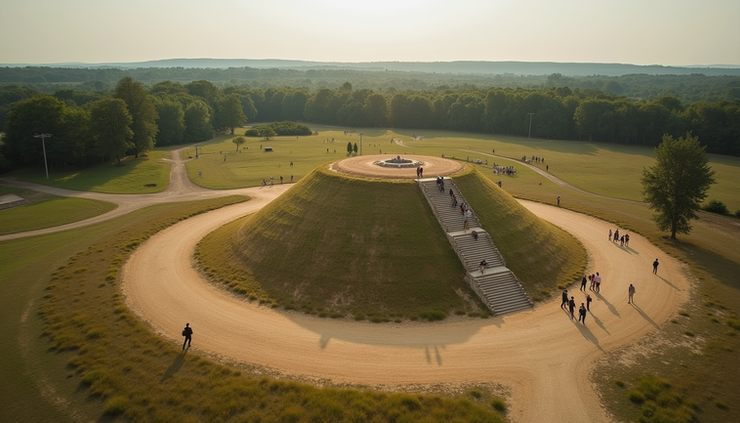
The landscape of Ocmulgee is no accident. Rolling hills, river valleys, and open plains created a setting where people adapted their farming, hunting, and community-building to the environment. The mounds themselves stand as evidence of intentional settlement and social organization. These earthworks were not just physical structures but centers for ceremony, governance, and connection.
Understanding this terrain helps us see how humans shaped their surroundings to support life and culture. The land was a partner, not just a backdrop. This relationship between people and place invites us to consider how our own environments influence our purpose and daily choices.
Rivers as Lifelines and Spiritual Pathways
The Ocmulgee, Oconee, and Altamaha rivers were central to life here. These waterways provided drinking water, food, and transportation. Canoes carried goods like copper, shell beads, pottery, and stone tools along these rivers, linking communities across vast distances.
These rivers also served as spiritual corridors and political boundaries. The Mississippian and later Muscogee (Creek) peoples traveled these waters, connecting chiefdoms such as Ocute in the Oconee Valley to wider regional networks reaching the Gulf Coast and Appalachians.
Walking beside the Ocmulgee River, I felt the pulse of history beneath my feet. The rivers were more than natural features; they were teachers and guides. They remind us that water sustains life physically and spiritually, and that our connection to it can reveal deeper meaning in our own journeys.

The Integration of Knowledge and Purpose
Ocmulgee shows how practical skills, social structures, spiritual beliefs, and creative expression come together to form a whole way of life. The mounds represent more than engineering feats; they symbolize the integration of these elements.
For example:
Practical knowledge: Farming techniques adapted to the terrain, hunting strategies, and tool-making.
Social knowledge: Community organization, trade networks, and political alliances.
Spiritual knowledge: Ceremonies held at the mounds, reverence for rivers, and ancestral connections.
Creative knowledge: Pottery, beadwork, and mound construction as expressions of identity and belief.
This integration offers a model for finding purpose today. It encourages us to blend our skills, relationships, beliefs, and creativity to build meaningful lives that honor both the past and the future.
Applying Ocmulgee’s Lessons to Your Life
Ocmulgee teaches us to pay attention to the environment, to honor the connections between people and place, and to integrate different kinds of knowledge. Here are practical ways to apply these lessons:
Connect with your environment: Spend time in nature, observe how your surroundings shape your daily life, and consider how you can live more intentionally within your space.
Value relationships and community: Like the chiefdoms connected by rivers, build networks that support shared goals and mutual respect.
Honor your spiritual or reflective practices: Find rituals or moments that help you connect with something larger than yourself.
Bring creativity into your routine: Use creative expression as a way to explore your identity and purpose.
By embracing these principles, you can discover a deeper sense of meaning rooted in both history and your present experience.
Author’s Note
As the author of this essay, I approach Ocmulgee National Monument not only as a historical site but as a living space that connects me to my ancestors, my spiritual path, and my personal journey of purpose. My exploration of the rivers, mounds, and the history of the Muscogee (Creek) people has been both academic and deeply personal. I wrote this essay in first person to honor the intimacy of this connection and to emphasize that history is not separate from our lives—it flows through us, shaping how we understand freedom, responsibility, and identity.
This work reflects my ongoing inquiry into lineage, spirituality, and the lessons embedded in place and memory. It also integrates reflections on the cost of freedom, the pursuit of acceptance, and the significance of water as both a literal and metaphorical guide. I aim to demonstrate how engaging with history, ancestors, and the natural world can inform our purpose, inspire personal growth, and deepen our understanding of the collective human experience.


Comments